3 hrs
Volleyball England launches new Referee Development Pathway
The new pathway sets out a clear framework for how referees develop, progress and stay active within the sport, ensuring that officials are better supported at every stage of the pathway.
Why is the referee pathway changing?
The changes reflect Volleyball England’s commitment to strengthening the officiating workforce and creating a more structured, supportive and consistent development experience for referees.
Drawing on feedback from referees, the previous system has been reviewed to ensure it:
-
Provides clearer expectations at each level
-
Better recognises the skills and behaviours required to referee effectively
-
Supports referees with ongoing development opportunities
-
Gives referees greater control over their own development
-
Provides fair and transparent progression based on performance and evidence.
What’s new?
The updated pathway introduces several key changes:
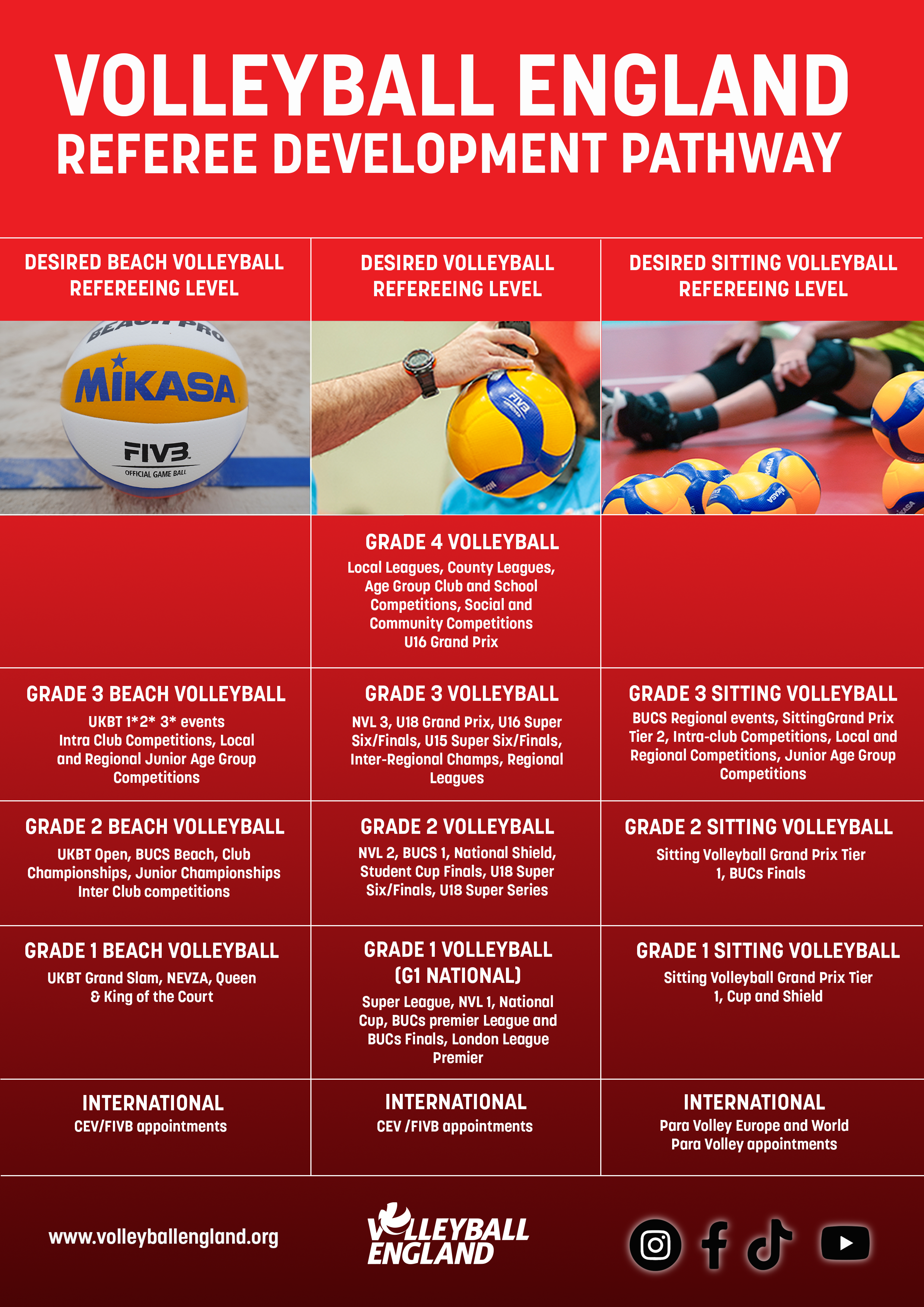
A clear and structured pathway. Click here to view the full Referee Development Pathway.
Referee grades are clearly aligned to competition levels, creating a structured pathway from local and regional volleyball through to national and international officiating opportunities.
The Referee Development and Progression Framework
The Referee Development and Progression Framework is designed to help referees understand the expectations at each grade and support their ongoing development. It outlines the knowledge, skills and behaviours needed for effective officiating and provides a clear pathway for progression.
The Framework is divided into four key areas:
-
Technical officiating
-
Knowledge and application of the rules
-
Communication and interaction with teams
-
Match management and personal effectiveness
To support referees in making the most of the Framework, Volleyball England has also produced guidance on how to use it to plan and support their development and progression.
Progression and Maintenance Requirements
The Progression and Maintenance Requirements set out what referees need to do each season to meet the expectations of their grade, while also providing a clear route for those seeking progression.
The requirements combine officiating activity, continuing professional development and annual learning, helping referees keep their knowledge and skills up to date.
For referees wishing to move to the next grade, the requirements also define the evidence, experience and competency standards needed to demonstrate readiness for progression, ensuring the process is transparent, consistent and based on performance and development.
Greater focus on development
The role of the Referee Developer will also replace traditional observation, providing a more supportive, coaching-led approach. Click here to find out more about the referee workforce.
Referee Review Forms (RRFs) replace the previous RC forms because they have been designed to reflect the new Referee Development and Progression Framework, ensuring feedback and development are assessed against the updated knowledge, skills and behaviours expected at each grade.
To support a smooth transition, any RC forms you have already completed will remain valid and can be included in your Portfolio of Evidence for the next two seasons. You can find out more about the review process, forms and portfolio of evidence within the progressing further section of your chosen discipline.
From Grade 2 upwards, referees can use Personal Development Plans to guide their progression, supported by feedback and ongoing learning. Guidance on how to use Personal Development Plans and get the most from the process can be found in the maintenance and progression section of your chosen discipline.
What does this mean for referees?
The new pathway is designed to make it easier for referees to:
-
Understand what is expected at their current level
-
Identify what they need to do to progress
-
Access development opportunities and support.
The only immediate change to current volleyball qualifications is the combining of Grade 3R and Grade 3N. Grade 4 beach volleyball and sitting volleyball referees will be regraded at Grade 3. Referees affected by this change will receive a direct email explaining what it means for them.
Newly qualified referees will now have a clearer development route, with progression no longer based on a single observation, but supported through regular match experience, ongoing learning and opportunities to keep their skills and knowledge up to date.
Many development opportunities are already in place, and we will continue to share more information about them throughout the year, including how to access and make the most of them.
How can you find out more?
Volleyball England will support referees and the wider community to understand the new pathway through:
-
Dedicated webpages explaining the Referee Development Pathway.
-
A launch webinar (sign up here to attend, under the CPD event group).
-
Published guidance documents, resources and supporting materials.
-
Ongoing support from Referee Developers and Tutors.
-
Regular updates and communications throughout the season.
What should you do now?
-
Get familiar with the new pathway and explore the resources available to support you
-
Understand what is expected at your current grade
-
Plan your development and progression for the season ahead
-
Take advantage of the support, learning and feedback opportunities available.
Once you have familiarised yourself with the new materials, please use this form here to submit any questions you may still have about the new Referee Development Pathway. Your questions will help us create a useful set of FAQs for referees and the wider volleyball community.
The new Referee Development Pathway is the result of the dedicated work and collective efforts of the Referee Pathway Working Group, whose members brought valuable expertise, insight and commitment to the process.
The group included Debra Smart, Lenny Barry, Glynn Archibald, Peter Parsons, Domitilla di Stefano and Roberto Rigante, and Volleyball England would like to thank all six for their valued input.
Main picture by Jem Wakelin (@jwakelinvisuals)